

Advanced Home Services Issues Indoor Air Quality Advisory Amid Rising Environmental Health Risks in Idaho
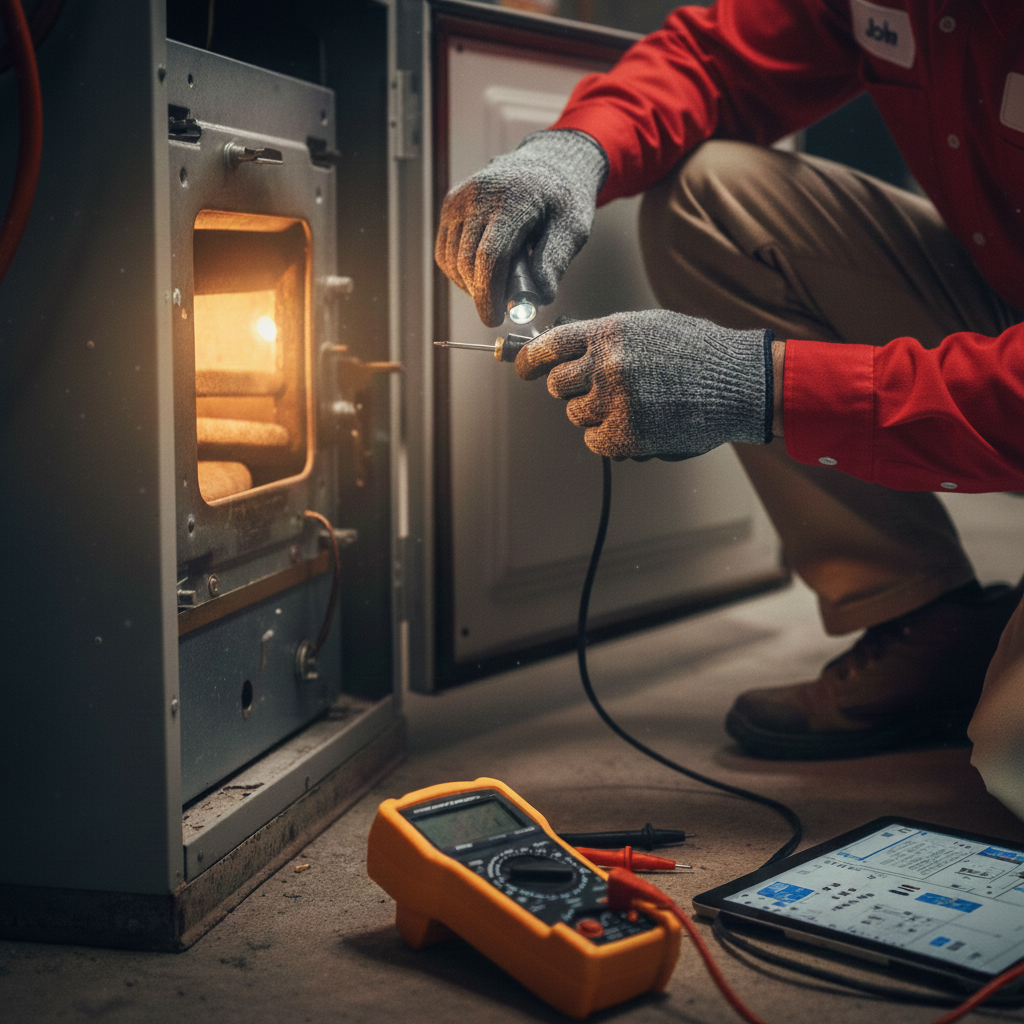
Technician inspecting furnace with tools and digital meter for HVAC maintenance.
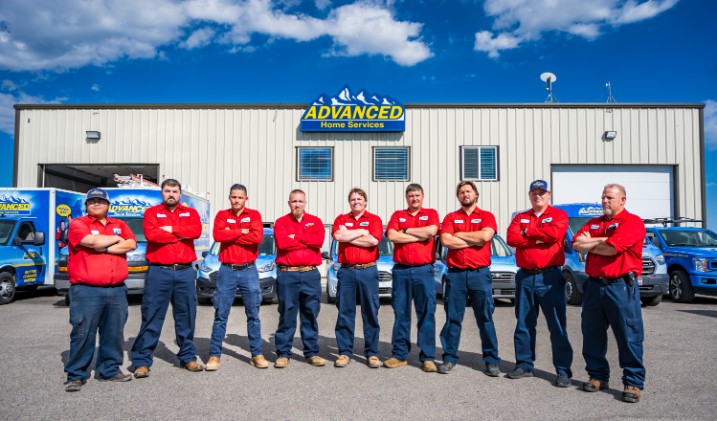
HVAC service team standing in front of company building and service trucks.
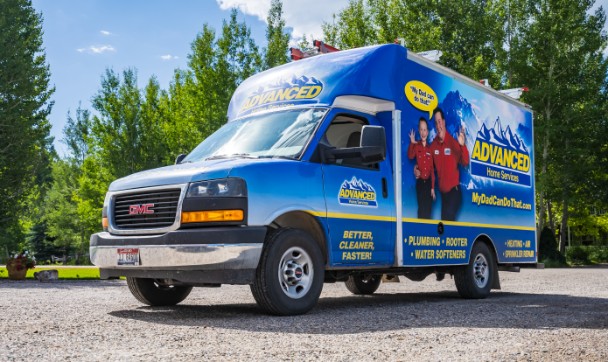
Advanced Home Services plumbing and HVAC service van parked outdoors.
Advanced Home Services issues technical advisory linking high Idaho radon and wildfire smoke risks to indoor air quality.
RIGBY, ID, UNITED STATES, December 2, 2025 /EINPresswire.com/ -- Advanced Home Services, a provider of residential HVAC, plumbing, and electrical services in Southeast Idaho, today issued a technical advisory regarding the convergence of seasonal environmental factors and building science, which has elevated indoor air quality (IAQ) to a critical public health concern within the state. The advisory details specific risks posed by radon gas concentration during winter, the pervasive presence of wildfire smoke particulates, and the technical necessity of proactive furnace maintenance and specialized air purification systems to mitigate long-term resident exposure. The core of the finding is that standard residential heating practices, while providing thermal comfort, are insufficient to address the state's unique pollutant load, necessitating a reassessment of home health protocols by residents and building professionals.The advisory, developed based on internal technical findings and external data analysis from public health and environmental protection agencies, highlights the central role of the home's heating, ventilation, and air conditioning (HVAC) system in either exacerbating or mitigating these indoor threats. The company’s technical teams report a direct mechanical link between deferred furnace maintenance and the system’s diminished ability to manage fine particulate matter and ensure safe operation. This analysis positions indoor air quality not as a peripheral comfort issue but as a measurable, critical health determinant for Idaho residents facing unique regional pollutant profiles.
The Regional Nexus of Risk: Radon and Particulate Matter
Idaho faces a specific combination of geological and meteorological hazards that make IAQ a more acute issue compared to other regions. Data from the Idaho Department of Health and Welfare indicates that an estimated two out of five homes in Idaho (approximately 40%) have elevated radon levels (defined by the Environmental Protection Agency (EPA) as 4.0 pCi/L or higher) that necessitate mitigation. Radon, an odorless, colorless, naturally occurring radioactive gas resulting from the decay of uranium in soil, is the second leading cause of lung cancer in the United States, responsible for an estimated 21,000 annual fatalities. Given that Idaho’s average indoor radon levels can be significantly higher than the national average, the risk of chronic exposure is substantial.
This hazard is compounded by the Northwest's shifting climate patterns, which have led to a marked increase in the frequency and intensity of annual wildfire smoke events. The smoke plumes transport vast quantities of PM 2.5 (fine particulate matter measuring 2.5 micrometers or less in diameter) across the region. From 2020 to 2022, wildfire smoke was found to be the cause of more than three out of every four unhealthy air days in several Northwest states, including Idaho. These microscopic particles bypass the body's natural defenses, embedding deep within the lungs and entering the bloodstream, where they are linked to cardiovascular events, acute respiratory distress, and long-term pulmonary disease.
The operational consequence of a tightly sealed home, necessary for thermal efficiency during the cold Idaho winter, is that it effectively traps and concentrates these pollutants. The same building envelope that conserves heat also prevents the dilution of radon, carbon monoxide (CO), volatile organic compounds (VOCs), and PM 2.5. This accumulation necessitates active, engineered mitigation.
Mechanical Integrity: The Role of Furnace Systems
The residential furnace is the primary engine of air circulation within a sealed home. Consequently, the condition and operational integrity of the furnace directly govern IAQ outcomes. Advanced Home Services emphasizes that while the purpose of furnace maintenance is often perceived as efficiency optimization, its fundamental health role is preventative mechanical safety and basic pollutant control.
A significant, immediate risk addressed by professional inspection is the potential for Carbon Monoxide (CO) poisoning. CO is a lethal, odorless gas produced by the incomplete combustion of fuels (natural gas, propane, oil). The heat exchanger is designed to isolate these combustion gases from the air stream distributed into the living space. Thermal fatigue and age can lead to cracks or pinholes in the heat exchanger, providing a pathway for CO to enter the home’s circulating air. Scheduled furnace maintenance is the appropriate technical mechanism for inspecting these safety-critical systems, often utilizing specialized tools to pressure-test or visually inspect the exchanger for failure points that mandate immediate furnace repair or replacement.
Beyond safety, the system’s ability to filter and circulate air is central to chronic exposure mitigation. Standard furnace filters (MERV ratings 1-4) are designed solely to protect the furnace blower motor from large debris and offer negligible protection against PM 2.5 or microscopic biological agents like mold spores and bacteria. Deferred maintenance results in clogged filters, which diminish airflow and reduce the system’s operational capacity, leading to stagnant air and inefficient pollutant removal.
The Advanced Services Team stated, “Our responsibility has evolved past merely ensuring a system heats or cools. Given the factual data on radon and wildfire particulate levels, the annual maintenance check is fundamentally a residential health and safety audit. We are proactively identifying mechanical failures, like a compromised heat exchanger, and advising on basic steps to control chronic health risks."
Technical Solutions: Beyond Standard Filtration
The technical limitations of standard HVAC systems in addressing modern IAQ threats have driven the adoption of specialized engineering controls, collectively referred to as Air Purification Systems. These solutions are designed to work in conjunction with, and often downstream of, the primary HVAC unit, specifically targeting the microscopic pollutants that standard mechanical filters cannot capture.
For mitigating wildfire smoke (PM 2.5), effective residential solutions often involve high-efficiency particulate air (HEPA)-style filtration, which can capture particles down to 0.3 microns at 99.97% efficiency. While installing such high-density filters may require system modifications to avoid unduly restricting airflow, their implementation is a necessary engineering response to the chronic particulate exposure faced by Idaho communities.
In addition to particulate control, biological contamination poses a significant risk. Mold spores and bacteria can propagate rapidly in the moist, warm environment of cooling coils, condensate pans, and ductwork, particularly in damp basements common across parts of Southeast Idaho. Air Purification Systems that incorporate Ultraviolet-C (UV-C) germicidal light technology are designed to neutralize these biological contaminants. When properly installed near the evaporator coil or within the duct system, the UV-C light disrupts the DNA of airborne viruses, bacteria, and mold spores, preventing them from replicating and being distributed throughout the home.
Broader Context and Economic Implications
The focus on IAQ represents a necessary response to the fact that Americans spend up to 90% of their time indoors, where pollutant concentrations can be two to five times higher than outdoor levels. The economic burden of poor air quality is considerable. Health costs associated with air pollution in the United States are estimated at approximately $2,500 per person annually, stemming from increased incidents of asthma, chronic obstructive pulmonary disease (COPD), cardiovascular issues, and absenteeism from work and school.
The issue is further complicated by the modern emphasis on energy efficiency, which favors tighter, better-sealed homes. While beneficial for thermal performance and reducing carbon emissions, this construction methodology inadvertently contributes to the accumulation of indoor pollutants. Without balanced mechanical ventilation or dedicated Air Purification Systems, the concentration of radon and VOCs can increase significantly, raising the long-term risk of developing chronic disease. Furthermore, managing humidity is also critical, as imbalances can lead to condensation and subsequent mold proliferation, another key IAQ factor driving respiratory illness.
Elevating the Standard of Residential Care
The convergence of geological risk, wildfire smoke trends, and building-envelope dynamics in Idaho mandates an elevated standard for residential HVAC care. For homeowners, this standard involves three non-negotiable components:
1. Professional Furnace Maintenance: Annual inspection for mechanical integrity, especially the heat exchanger, and the timely replacement or upgrade of air filters to address particulate matter.
2. Prompt Furnace Repair: Immediate action when signs of combustion issues or component failure arise, directly addressing the life-safety threat of Carbon Monoxide.
3. Targeted Air Purification Systems: The installation of supplementary, professional-grade purification technology (HEPA-style filtration, UV-C lights) to manage the ultra-fine particulate and biological agents that are endemic to the regional environment.
Advanced Home Services maintains that the integration of these three pillars into routine home maintenance is no longer a matter of comfort but a necessary engineering response to documented health risks in the Idaho environment. This approach is intended to transition the residential environment from a sealed trap for pollutants into a controlled sanctuary of safe, breathable air.
About Advanced Home Services
Advanced Home Services is a comprehensive provider of essential residential services in Southeast Idaho, specializing in heating, ventilation, and air conditioning (HVAC), plumbing, and electrical systems. Established over two decades ago, the organization focuses on technical diagnostics, certified furnace repair, scheduled furnace maintenance, and the installation of contemporary mechanical systems, including air purification systems. The organization is committed to maintaining high standards of technical accuracy and operational safety for residential infrastructure throughout its service area.
Krissy Goff
Advanced Home Services
email us here
Visit us on social media:
Facebook
YouTube
Legal Disclaimer:
EIN Presswire provides this news content "as is" without warranty of any kind. We do not accept any responsibility or liability for the accuracy, content, images, videos, licenses, completeness, legality, or reliability of the information contained in this article. If you have any complaints or copyright issues related to this article, kindly contact the author above.
